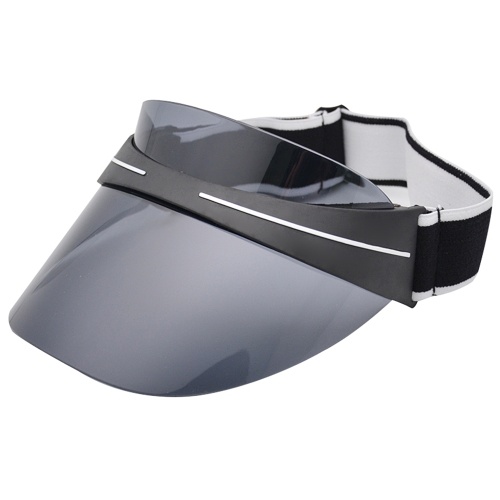
Visière en plastique transparente
OverView
Helicopter Flight Services - The Ultimate Tour + 9/11 Memorial Museum
New York Helicopter Tour: Helicopter Flight Services is proud to operate top-of-the-line, high-performance Bell407 (up to 6 pax) and EC130 (up to 7 pax) helicopters. The spacious cabins and high visibility windows have been specially designed for sightseeing which allows 180 degree views; no other helicopter operator in New York City can offer these unobstructed views. The Bell and EC130 have proven to be safe, fast and powerful helicopters giving an incredibly smooth ride in virtually all conditions. Pilots are specially trained on both types of helicopters and the state-of-the-art safety system, TCAS. TCAS is an onboard radar system that allows pilots the advantage of managing the air traffic around them. All passengers enjoy their flight with voice interactive headsets to hear and speak to the pilot and each other. 9/11 Memorial Museum: The National September 11 Memorial Museum serves as the country’s principal institution for examining the implications of the events of 9/11, documenting the impact of those events and exploring the continuing significance of September 11, 2001. The Museum’s 110,000 square feet of exhibition space is located within the archaeological heart of the World Trade Center site—telling the story of 9/11 through multimedia displays, archives, narratives and a collection of monumental and authentic artifacts. The lives of every victim of the 2001 and 1993 attacks will be commemorated as visitors have the opportunity to learn about the men, women, and children who died. Visitors to the Museum descend a gently sloped ramp as they make their way to the original foundation level, where the main exhibition space is located. The descent echoes the construction ramps used to build the original World Trade Center, which were placed again at the site in the aftermath of the attacks for removal of debris and to provide access for victims’ family members and others on the anniversaries of 9/11. As visitors make their final descent to the exhibition level, they will pass alongside the Vesey Street stair remnant, the historic "Survivors' Stairs." On 9/11, hundreds escaped with their lives, fleeing down this stairway. Visitors will also see the remnants of structural columns that now delineate the footprints of the original Twin Towers. The mission of the 9/11 Memorial Museum, located at the World Trade Center site, is to bear solemn witness to the terrorist attacks of September 11, 2001 and February 26, 1993. The Museum honors the nearly 3,000 victims of these attacks and all those who risked their lives to save others. It further recognizes the thousands who survived and all who demonstrated extraordinary compassion in the aftermath. Demonstrating the consequences of terrorism on individual lives and its impact on communities at the local, national, and international levels, the Museum attests to the triumph of human dignity over human depravity and affirms an unwavering commitment to the fundamental value of human life. EXHIBITIONS AND EDUCATION CENTER Memorial Hall is situated between the Twin Tower footprints and features a quote forged from remnant World Trade Center steel and a site-specific art installation, Trying to Remember the Color of the Sky on That September Morning. In Memoriam is a quiet, contemplative space that invites you to honor and to learn more about each of the 2,983 people killed in the September 11, 2001 and February 26, 1993 attacks. September 11, 2001 is the main historical exhibition, comprised of three parts that explore the day of 9/11, what led up to the attacks, and the immediate aftermath. Tribute Walk presents a variety of artistic expressions created in response to 9/11. South Tower Gallery features the immersive media experience Rebirth at Ground Zero, which used time-lapse footage and recorded interviews to capture the transformation and renewal of the World Trade Center site. Run time: 11 mins. South Tower Excavation reveals the steel box column remnants that anchored the Twin Towers to bedrock. It is alongside an exhibition about the original construction of the World Trade Center. Center Passage demonstrates the scale of the 9/11 attacks through the monumental aritfacts, evoking the magnitude of the World Trade Center buildings and their destruction. Foundation Hall contains remnants of the original World Trade Center, including the slurry wall and the celebrate Last Column. Reflecting on 9/11 is an ongoing media installation that tracks personal reflections about 9/11 by government officials, historians, 9/ survivors, family members of victims, journalists, and Museum visitors. Recording Studio allows you to add your voice to the Museum exhibitions. Record where you were on 9/11, a remembrance of a victim, or a response to a question posed in Reflecting on 9/11. Film Features - Offered daily and free to Museum visitors. Located in Auditorium, Museum Pavilion L-2 Level "Facing Crisis: America Under Attack" Key 9/11 decision makers describe the events of the day. Features original interviews with President George W. Bush, New York Gov. George Pataki, New York City Mayor Rudolph Giuliani, among others. Screened exclusively at the 9/11 Memorial Museum. "Facing Crisis: A Changed World" World leaders examine 9/11’s impact on global events. Features original interviews with President George W. Bush, British Prime Minister Tony Blair, and Pakistani President Pervez Musharraf, among others. Screened exclusively at the 9/11 Memorial Museum. "Rebirth at Ground Zero" This multi-screen film experience uses time-lapse footage and recorded interviews to present an inspiring first-hand perspective of the transformation and renewal of the World Trade Center site and the uplifting personal journeys of some of those most directly affected by the attacks. Located at Rebirth at Ground Zero, Exhibitions and Education Center (South) C-4 Level Live Talks - Free to Museum visitors. Located at the Auditorium, Museum Pavilion L-2 Level "The Stories They Tell" 9/11 Memorial staff share behind-the-scenes stories about the Memorial and Museum, and its collections. Schedule: Offered Monday through Friday at 12 p.m. Approximately 30 minutes. "We Were There" Personal stories of remembrance and resilience presented by the 9/11 Tribute Center. Schedule: Offered Tuesdays at 4 p.m. Approximately 30 minutes. "Never forget" was the heartfelt refrain after the World Trade Center attacks on September 11, 2001. And now, 13 years later, the National September 11 Memorial Museum has opened, to memorialize those who lost their lives -- and to ensure, once again, that the world will "never forget." The museum’s power rests, first and foremost, in its location: The 110,000 square feet of exhibition space are within "the archaeological heart of the World Trade Center site." The museum takes visitors underground -- literally. It lies 70 feet below ground, so entering the museum involves descent from the light of the outside into dimly lit depths, which adds to the overall power and pathos of this hallowed ground. A variety of fascinating exhibits reveal the makeup of New York City’s impressive bedrock, like a 450-million-year-old chunk of Manhattan schist, excavated in August 2008. WTC’s architectural grandeur is also showcased via a large-scale model, originally built in 1969 to 1971, which is one of the largest and most detailed WTC presentation models still surviving today. It’s a powerful piece, because it highlights what the World Trade Center was, rather than what became of it. And what became of the WTC is displayed throughout the museum, including the Survivors’ Staircase, which was the last visible remnant of the buildings after the attacks. The stairs served as a critical life route for many to escape, and in 2008, the 58-ton stairway moved to the museum, where it looms today. Visitors can also view a massive twisted piece of "impact steel" -- a portion of the north tower facade that suffered a direct hit from American Airlines Flight 11. One side of the museum encompasses the slurry wall, a retaining wall that was built to keep the Hudson River from flooding the site. But though the museum is filled with massive pieces that bear the scars of tragedy, it’s the small personal objects that are perhaps the most haunting: smudged reading glasses, a pair of heels, a trampled wallet splayed to reveal its contents of coins and credit cards, a flight attendant’s wing lapel. As The New York Times art critic Holland Carter beautifully summed it up: “Infused with lost life, they make the experience of moving through this museum at once theatrical, voyeuristic and devotional.” Above all, the museum is a tribute to the victims, to the survivors -- and to their loved ones. Numerous exhibits feature photographs, audio, videotapes and recorded testimonies connected to September 11, 2001 and also to the February 26, 1993, WTC bombing. In many ways, the museum is as much about the WTC’s demise as it is about New York City’s resilience. This is especially evident above ground, at the sun-washed memorial, where parapets engraved with the 2,983 victims’ names surround the twin Memorial pools, which shimmer in the footprints of the Twin Towers. Here, beauty has taken the place of tragedy. Did you know? President Barack Obama, along with September 11 survivors, rescuers and victims’ relatives, were all present during the opening dedication ceremony of the museum in May 2014. Joining Mr. Obama for a tour of the museum were former President Bill Clinton and former Secretary of State Hillary Rodham Clinton. The World Trade Center (WTC) was much more than just a few buildings. The complex consisted of seven structures, covering 16 acres, and included offices, the Windows on the World restaurant, and an underground shopping mall. Roughly 50,000 people worked at the WTC complex, while 40,000 passed through daily. The numbers behind the National September 11 Memorial Museum are impressive: The museum has more than 10,000 artifacts, 23,000 still images and 500 hours of film and video. ACCESSIBILITY The Museum welcomes all visitors. The facility is wheelchair accessible. Manual wheelchairs are available, free of charge on a first-come, first served basis at the coat check on the Concourse Lobby level. Induction loops are installed throughout the Museum, including in the exhibitions, auditorium, and classrooms. Open captioning or written transcripts are available for all exhibition media installations that feature audio. Sign Language interpretation is available, free of charge, for guided tours and public programs by request with two weeks advance notice. The 9/11 Museum Audio Guide is VoiceOver compatible on all iOS devices and includes a descriptive tour for visitors who are blind or partially sighted. Large print materials are available upon request at the Information Desk. Service dogs are welcome. AVAILABLE TOUR LANGUAGES: Sign Language, Spanish, German, Italian, Japanese, Chinese, French and Portuguese
Urban Adventures - Detroit - Corktown is Popping! [USDF]
Trip style: Walking tour, neighborhood tour Language Tour: English Full Itinerary Strap on your walking shoes for what’s sure to be the most epic tour of Detroit’s historic Corktown this side of Michigan Avenue. We’ll start on a block that has been key to Corktown’s revival, where BBQ, burgers, coffee, and craft cocktails beckon crowds of hungry and thirsty Detroiters. From here, you’ll take in the contrasting views of Detroit’s highs and lows. We’ll walk toward the massive Michigan Central Railroad Station, left for ruin and a symbol of the decline of Detroit. We’ll get a good look at this hulking structure, which has been ranked as one of the “must-see” abandoned buildings in the world. To contrast that, we’ll continue our Detroit walking tour past the charming, colorful Victorian houses of residential Corktown. This is Detroit’s oldest neighborhood, listed on the National Register of Historic Places. Your guide will point out some local faves, like a charming Irish tavern, an indie record store, a great deli, and a popular new brewpub. We’ll also hear about the new microbrewery, start-up hub, and technology center that are helping to define Corktown as the neighborhood to know. Along the way, your local guide will point out an early 19th-century church that’s one of oldest churches in Detroit. Hopefully by this point you’ve worked up an appetite for a visit to the new Detroit Institute of Bagels — yes, it’s as official as it sounds and for you bagel snobs out there (we see you, New York), they take traditional bagel-making seriously. Start your seventh-inning stretch as we return to Michigan Avenue for a mile-long stroll past The Greening of Detroit office (and learn a little about their tree-planting and beautification efforts), and to Ernie Harwell Park, the gone-but-not-forgotten former home of the Detroit Tigers. This was the home field for baseball greats like Ty Cobb, Hank Greenberg, and Al Kaline, and is where Nelson Mandela spoke shortly after his release from prison in South Africa. We’ll be sure to stop by Detroit Athletic Co. that started as a humble peanut stand and has grown to provide the best selection of sports swag. Along our Corktown tour, you’ll hear about the local funky spot for live music and art shows, and a favorite shop where you can get a “Coney dog” without having to go to Coney Island. Your local guide will also point out where to get some crazy-good shawarma sandwiches that Detroiters absolutely love, as well as epic burgers, wine, and charcuterie. Our colorful Detroit tour ends at a pot of gold in the Gaelic League Irish-American Club of Detroit. You may be a wee bit thirsty by the time we arrive, so we’ve got you covered with a complimentary half-pint. After the tour has officially ended, you’re free to stay at the Gaelic League for more beer or some Irish whiskey, or maybe you’ll want to visit the tasting room at Two James Distillery, or visit Batch Brewing Co., Brew Detroit, or one of the other great bars in Corktown. If all those foodie spots we passed have your stomach rumbling, your guide can point the way. Just ask them for a recap of the local lunch-and-a-pint haunts that make Corktown pop!
Gray Line Las Vegas - Gran Cañón South Rim - Bus + IMAX Tickets
Viaje cómodo a bordo de un autobús lujoso con lavabos, televisores, aire acondicionado, asientos reclinables y repos pies. Su recorrido comenzará con una parada para sacar fotos en la presa Hoover desde el increíble puente O'Callaghan-Tillman, con tiempo suficiente para disfrutar de la majestuosidad de la obra maestra de ingeniería, y luego retomar el viaje hacia el Gran Cañón. Durante el recorrido se realizarán 2 paradas para sacar fotos así como también un descanso para comer en el Centro de Visitantes del Gran Cañón. También se visitará el teatro IMAX para ver la película de 30 minutos: los secretos escondidos del Gran Cañón. Todos los vehículos ofrecen Wifi en todos los tours: 15 minutos – gratis hasta 25 MB 1 hora – 2’95$ hasta 255 MB 3 horas – 4’95$ hasta 655 MB 24 horas – 14’95$ hasta 1000 MB
Oreiller de voyage en mousse à mémoire de forme
Sevilla Piragüismo de viaje - Explora el río Guadalvir
Una manera fantástica de explorar y ver las vistas de la ciudad desde el río y la oportunidad de refrescarse en el río también! Disfrutar de un nuevo enfoque de puntos de referencia y el horizonte de Sevilla Combinar una visita turística con una experiencia en kayak fácil de llevar Disfrutar de la naturaleza y la ciudad al mismo tiempo. Si usted nunca ha intentado kayak, esta es una gran oportunidad para probar y disfrutar de una gran aventura . Mínimo de 2 personas requeridas para cada kayak doble.
sac à dos transparent cartable pour étudiants masculins et féminins sac à dos de sport de mode de grande capacité en plein air miniinthebox
Catégorie:Sac de Voyage; Fonction Première:Usage quotidien,Portable; Matériau:PVC; Fonction:Durable,Voyage,Rangement de Voyage,Portable; date d'inscription:05/05/2022