SEA LIFE London Aquarium + Big Bus London Classic + FREE Tower Bridge
OverView
Slieve League Magical Donegal Day Tour Hidden Dublin Tours
This is a sacred mountain, as for over a thousand years there was a Christian pilgrimage. There’s much to know about Sliabh League, like the monks who went to Iceland or the eagle and the baby! The scenery all the way up to the Cliffs is spectacular with views of the Atlantic and the Sligo Mountains out in the distance. You also have a great view overlooking Donegal Bay. As you reach the summit you are rewarded with the most beautiful sight of the walk - the cliff face of Bunglas (which simply means "End of Cliff"). See the ruins of a watchtower (as per video below) at the end of Carrigan Head on your journey up also. This watchtower was constructed to defend the northwest coast during the early 19th century when there was the threat of a Napoleonic attack. We then pass through a lovely village called Carrick, before reaching a small harbour village called Teelin. Teelin has a famous Pub called "The Rusty Mackerel" where we stop for a rest. The name of the rusty mackerel came about because way back when there was no refrigeration, they would salt the mackerel in wooden barrels and this way they would keep for months on end without losing their freshness. One of these barrels can be seen still standing outside the front of the pub! Visit historic Donegal Town - home of the O'Donnell Clan and Donegal Castle, and is situated just on the edge of Donegal Bay. The centre of town, known locally as 'The Diamond', is surrounded by bustling cafes, shops, and bars. Stop at Killybegs Harbour which has long been acknowledged as Ireland’s leading fishing port, and a stroll along the pier gives a chance to admire the fishing boats, net menders, and perhaps even catch a glimpse of the seals. And dont forget about Fintragh Bay where you can admire Drumanoo Head, Inishduff Island and Muchros Head! Visit MAGICAL DONEGAL TODAY, ONLY WITH HIDDEN DUBLIN TOURS!
Queenstown Combos- Skydive + Shotover Jet + Helicopter + Rafting
YOU SHOULD BRING: Swim wear Towel Warm clothes during winter periods
StarLine - Bus Turístico Los Angeles (CS24)
Los divertidos tours turísticos en autobús para familias también ofrecen narraciones pregrabadas en nueve idiomas diferentes, lo que le permite aprender más sobre las muchas atracciones y puntos de interés a lo largo del camino. (inglés, español, francés, portugués, italiano, alemán, chino mandarín, japonés, coreano) La mayoría de los tours se realizan a bordo de exclusivos autobuses rojos de dos pisos al aire libre, que son perfectos para disfrutar del hermoso y soleado clima del sur de California. Este tour es accesible en silla de ruedas. Encontrará el mapa de las rutas en este enlace
DoDublin Card
Bookings must be redeemed in advance. Please bring your reservation ticket to the locations listed to pick up your ticket: Dublin Airport, Terminal 1, Monday - Saturday 08.00 - 21.30 Sunday 10.00 - 18.00 +353 (1) 8444265 FREE Dublin Bus Head Office 59 Upper O'Connell Street Dublin 1 Monday - Friday 09.00 - 17.30 Saturday and Sunday 09.30 - 14.00 +353 (1) 7033028 FREE Vouchers must be PRINTED OUT and cannot be accepted on smartphones or mobile devices. DoDublin Travel Card voucher must be redeemed at our Airport or City Centre Desk and cannot be redeemed directly from the bus driver. DoDublin card is accepted on all Dublin Bus buses comprising of 90% of the city's public buses, however the card is not accepted on Go-Ahead bus routes. - If unsure look for the Dublin Bus logo. Child Tickets are for Children Aged 5 to 14 years. Children under 5 years of age can travel free when accompanied by a fare paying adult. Note: DoDublin Card can not be used on the Nitelink bus service. Best value Travel Card in Dublin City
London Eye + Thames River Rover Pass
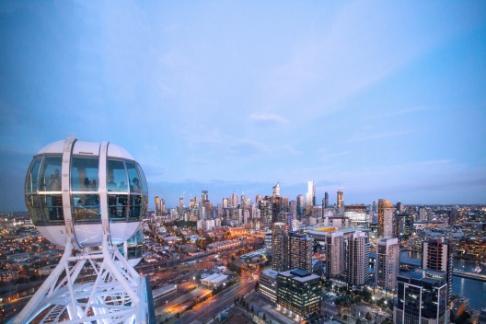
Thames River Rover With the River Red Rover ticket you travel in luxury on a fleet of river liners and may hop on or off at any of the piers as often as you like throughout the day. As the River Thames weaves its way through the heart of London there is history around every bend and there is no better way to see and experience the sights and splendour of this great city than from one of City Cruises modern, wheelchair-friendly RiverLiners™. Enjoy unsurpassed views of some of London's most famous landmarks from the vantage point of our open upper decks and spacious lower saloons with panoramic windows. Take advantage of two bars providing light refreshments and snacks . Cruises depart frequently from Westminster Pier, Waterloo (London Eye) Pier, Tower Pier and Greenwich Pier every day of the year except Christmas Day (25th December). Our shortest trips between piers last about 20-30 minutes while the full round trip takes about two-and-a-half leisurely hours. London Eye At 450ft high, the London Eye is the world's highest observation wheel. 32 Capsules, each carrying 25 guests, take you on a 30 minute journey through the most spectacular views of, over and around London spanning 25 miles in all directions. Combine your experience with the London Eye River Cruise Experience, a 40-minute sightseeing circular cruise on the River Thames, passing the Houses of Parliament, Tower of London and St Paul's Cathedral. London Eye 4D Experience The London Eye 4D Experience is a groundbreaking 3D film with in theatre effects, such as wind, bubbles and mist, to make the 4D. The film itself is a touching story of a little girl in London with her father. Her view of famous London landmarks is obscured by people and traffic, but a seagull draws her attention to the London Eye and her father takes her for an experience; finally she has an amazing view of the city. Colourful parties inside the capsule, time lapse of the London Eye day and night and a spectacular firework display all add up to an emotional and entertaining experience; the perfect prelude to an experience on he London Eye itself.
Tower Bridge Exhibition + HMS Belfast
HMS Belfast One of the most powerful large light cruisers ever built, HMS Belfast is now the only surviving vessel of her type to have seen active service during the Second World War. HMS Belfast played a leading part in the destruction of the battle cruiser Scharnhorst, and also the Normandy Landings. In service with the Royal Navy until 1965, she was saved for the nation in 1971 as a unique reminder of Britain’s naval heritage. Launch! Shipbuilding Through the Ages This new family-orientated exhibition will use hands-on and computerised interactive displays and engaging film and footage to demonstrate techniques of shipbuilding, from the ‘age of sail’ to modern prefabrication methods. The exhibition will focus on the science, engineering and social history of shipbuilding in Great Britain, and the interactive elements of the exhibition will allow children of all ages to get involved and experience this history. Explore ‘What shall we give in return for so much?’ One of the most powerful large light cruisers ever built, HMS Belfast is now the only surviving vessel of her type to have seen active service during the Second World War. Serving Britain for 32 years, she played an important role in both the Second World War and the Korean War as well as performing peacekeeping duties throughout the 1950s and 1960s. Saved from destruction in 1971, HMS Belfast is now part of the Imperial War Museum and is the first ship to be preserved for the nation since Nelson’s Victory. Through its team of staff and volunteers – many of whom are veteran crew – the Imperial War Museum is dedicated to making sure that HMS Belfast still has a role to play in reminding visitors of her unique place in Britain’s maritime heritage. History of HMS Belfast The term 'cruiser' goes back to the days of sailing ships when large frigates could be detached from the main fleet to cruise independently. The sailing cruiser, like her twentieth-century counterpart, was sufficiently powerful and fast to attack and destroy enemy commerce raiders. During the nineteenth century when sail gave way to steam and wooden ships were replaced by those built of iron, and later of steel, the cruiser evolved into a powerful warship which was used to patrol the Empire trade routes and protect friendly merchant shipping. After the First World War (1914-1918) a single category of cruiser emerged whose size was indicated by the size of its guns; thus, HMS Belfast is a 6-inch cruiser, designed for the protection of trade, for offensive action, and as a powerful support for amphibious operations. Please note: children under 16 must be accompanied by an adult. Please allow 1½ - 2 hours for your visit. Tower Bridge Exhibition Walkways & Exhibition: Visitors enter Tower Bridge Exhibition via the North Tower. They are then transported by lift to the top of the Tower (47 metres above the Thames) where they have a unique opportunity to see the Bridge’s steel skeleton from within. A short film explains the history and provenance of the Bridge and then there is the chance to admire the spectacular views – from both covered Walkways. On Monday 1st December, Tower Bridge’s East Walkway will reopen with its own GLASS FLOOR, joining the West Walkway to complete our new-look exhibition. Together with far-reaching views of East London, the walkway will be bolstered with a further 20 revered bridges in the extended popular display, ‘Great Bridges of the World’. On the east Walkway there are fantastic views of the Docklands and from the west Walkway you can see the new GLA building, the Tower of London, St Paul’s, the city, the Pool of London and Big Ben and the London Eye in the distance. Interactive computerised kiosks and graphic panels explain the significance of the views to visitors, as well as providing more information on the history and building of the Bridge. The interactive material and graphic panels are written in seven languages and an audio loop for the hard of hearing is also in place for the video show. There is another film to view in the South Tower before descending for the short walk to the historical Engine Rooms, included in your ticket price. Victorian Engine Rooms: These provide a fascinating insight into late 19th century engineering. Installed for the completion of Tower Bridge in 1894, these huge, and beautifully maintained, coal-driven engines were used to power the thousands of bascule Bridge lifts performed until 1976. Although lifts are now operated by electricity, the original steam engines are still in place. The Engine Rooms give visitors a chance to experiment with models demonstrating the technology behind the Bridge. There are also some amazing photographs of Tower BridgeTthroughout its lifetime – including a revealing picture of the heavy steel structure of the Bridge as the stone cladding was installed over it.